Episode Transcript
[00:00:00] Speaker A: Coming to you from rockingham ipl radio.
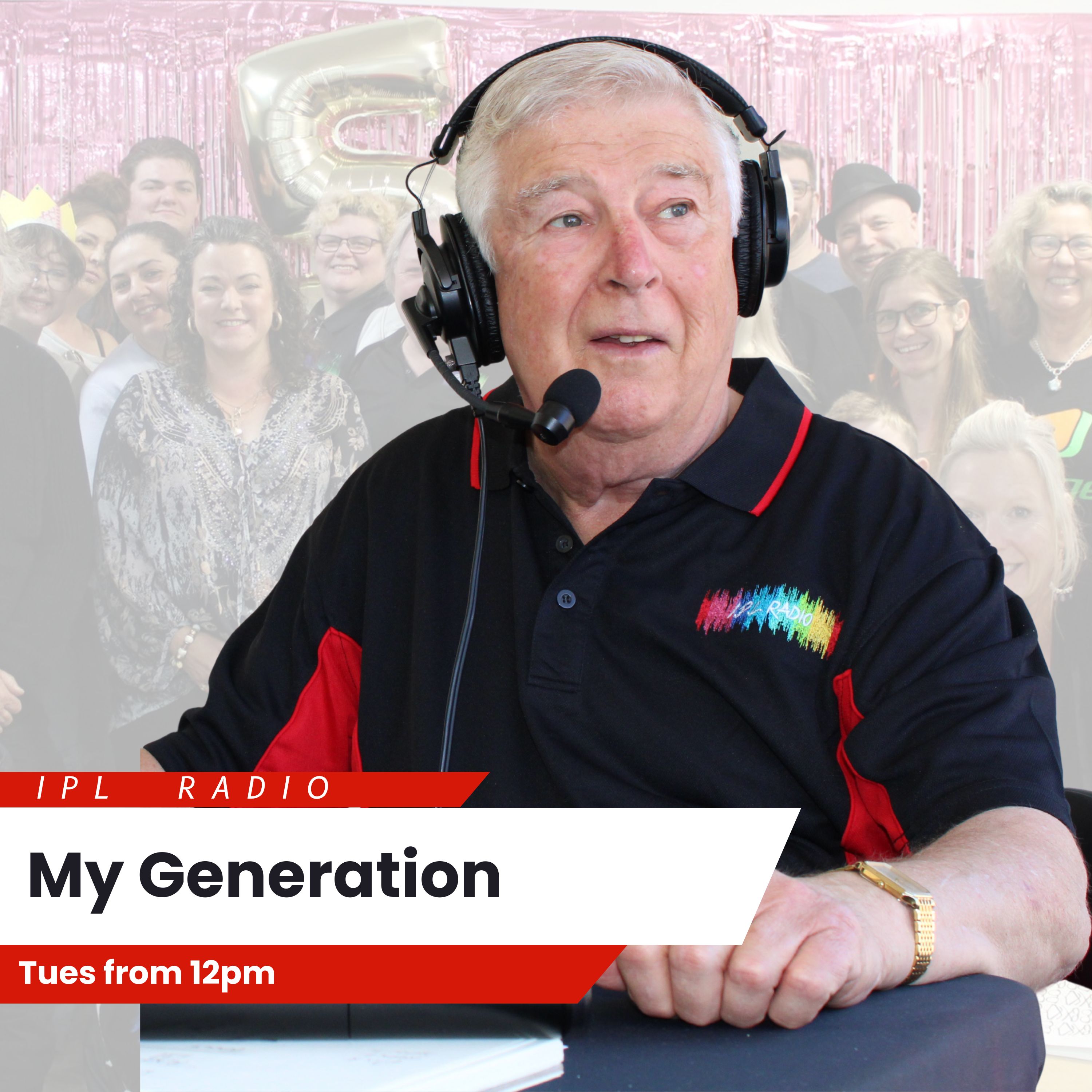
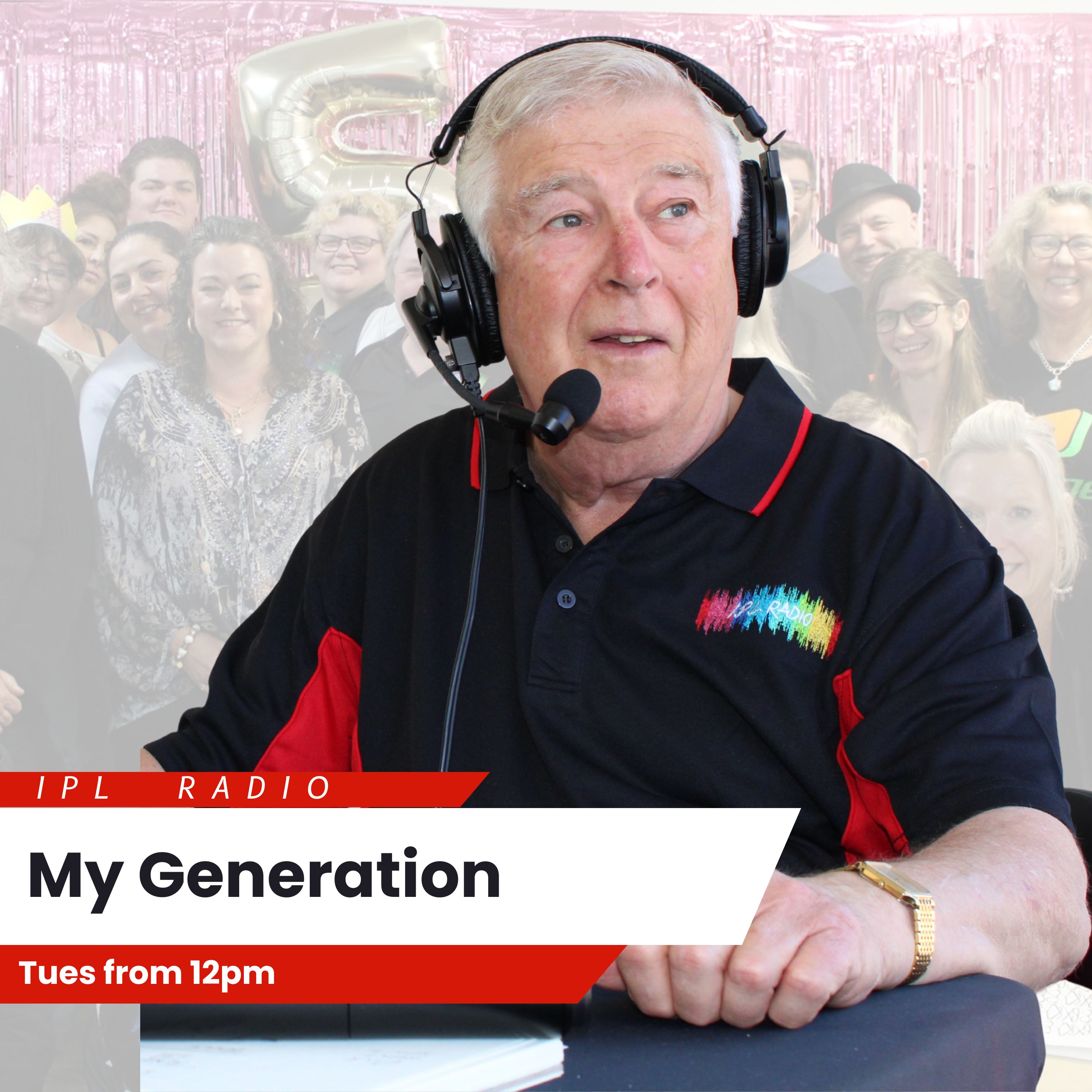
You're listening to My Generation on IPL Radio. A couple of days ago, I got an email from LinkedIn and it says, Congratulate Bevan Jones on 13 years in sunshine Radio. Welcome to the show, Bev.
[00:00:24] Speaker B: Thanks, Al. Great to be here again in the new studio.
[00:00:27] Speaker A: Yeah. And congratulations on 13 years.
[00:00:31] Speaker B: Yeah, some say 13 is an unlucky number, but seems to be okay.
[00:00:35] Speaker A: Pretty good for you.
[00:00:35] Speaker B: Yeah, it's. It's funny, it's one of those things, you know anyone that works anywhere 13 years, sometimes it can seem like it's gone very quickly. Sometimes it's been ages. You know, start with thick dark hair.
You know, it's a bit gray, but it's been good.
[00:00:52] Speaker A: Well, I'll tell you what, Viv, your, your hairstyle is much better than your Facebook photo that you have on there.
[00:01:00] Speaker B: That was, I think that's the photo during COVID when everyone went a little bit feral, let my hair grow out because I didn't have to go, really see too many people.
[00:01:09] Speaker A: So fair enough.
Now, Sunshine started in 1988 and you operated as Sunshine Radio. Then some years later you marketed yourself as 90 98. 5.
And then I think last time we were speaking to you, you were back to Sunshine Radio.
[00:01:30] Speaker B: Yeah.
[00:01:31] Speaker A: Still on 98.5.
Now obviously there was a purpose behind that.
[00:01:39] Speaker B: Yeah. So when I started 13 years ago as the CEO, what we discovered that there was a lot of people, like well over half of Perth didn't even know we existed.
And so it was basically telling people where to find us. So it was deliberate marketing thing was the 98.5 or 98.5 was to just let more people know that that's where you find us fm. And fortunately we got to the size where we could afford some and we were donated some good bus back advertising and things like that.
So we did that. And then as technology changed and you know, Facebook and online and Dab Digital radio and apps and all that kind of stuff became more prevalent and video became more important, we worked out that it was more important about that people could find us on lots of different platforms like you guys, they could listen online, other things like that. So we went back to Sunshine knowing that a lot more people knew where we were.
But Sunshine meant, Sunshine Media meant, you know, we're on all the different social medias, we're on apps, we're on our website.
It's not just radio.
[00:02:51] Speaker A: Right.
[00:02:51] Speaker B: And I noticed you've got a camera pointed at me.
[00:02:53] Speaker A: You have.
[00:02:54] Speaker B: And that's you guys embracing the video and visual as well. So it's the old days of just radio just on a dial is changed and you guys are active on Facebook, you've got video going the whole lot. So it's more that I think all of us, you and Sunshine and all of that, we're more media people now. We're about engaging people on whatever platforms available.
[00:03:20] Speaker A: Have you been able to measure sort of how effective that's been for you?
[00:03:24] Speaker B: Yeah, so we've been fortunate enough that we're of the size like a lot of community radio stations are, but we're of the size where we can afford surveys. So we have two surveys a year to measure listeners and so we're now, I think, the ninth most listened to in WA.
So we're sort of sitting between 6ix and 6pr, as in numbers wise.
[00:03:49] Speaker A: Right.
[00:03:50] Speaker B: So we've got good numbers, about 180,000 regular listeners.
So it's more about that whole awareness and people finding that nice alternative. Same as for you guys, you know, it's not the usual discouraging angry radio is positive and it's people more people find. It's just letting people know you're there. So, yeah, it has worked.
[00:04:13] Speaker A: So are you measuring your online listeners numbers? Yeah.
[00:04:18] Speaker B: The good thing about. And those that have a smartphone or websites or savvy with online know that you can actually measure online better than you can listeners.
[00:04:27] Speaker A: Yes.
[00:04:28] Speaker B: So our actual online numbers are now higher than our listing numbers.
[00:04:33] Speaker A: Is that a fact?
[00:04:34] Speaker B: Yeah. So we've got about, every month about 250,000 people will engage with us online in some way.
[00:04:42] Speaker A: And you're getting a lot of overseas listeners. Yeah.
[00:04:45] Speaker B: Interesting. When I say a lot, there would be probably a few hundred and it's really interesting seeing where they listen from. Yes, from Canada, uk, Asia, Malaysia.
Yeah, all over the world. And it seems that the UK and Canada is the most popular, which is really interesting.
[00:05:07] Speaker A: Well, that's very interesting because our experience here is that 50 of our listeners are from USA.
Yeah.
So it's, it's an interesting phenomenon and I don't know how to explain it.
[00:05:23] Speaker B: Love the Aussie accents.
[00:05:27] Speaker A: So from your perspective, what is the future of radio now? We've seen the evolvement of music from vinyls to tapes to CDs and now it's all digital and obviously sort of radio is going through a bit of evolvement as well.
Where do you see it heading?
[00:05:51] Speaker B: Interestingly, because the numbers will show that free to air television is really, you know, decreasing all the time.
However, radio numbers are staying the same or growing.
What we find is the all around the world surveys. But the surveys is that as many or more people are listening to radio maybe for less time. Like a lot of people would tune in for hours a day, they might not do that, but radio has that immediacy and engagement weather wise, what's happening in your town, all of that.
So the future of radio is if radio is smart and is local and is relevant and feels like it's a two way conversation. Because whether it's text lines or phones or whatever, often people can engage and ring up or text and give their opinions.
So that's the advantage of radio. And the other thing about radio is why we're calling ourselves Sunshine Media is that with streaming online or on Facebook or there's all these different areas you guys can engage. It's more than just radio now. So you guys at ipl, it's really kind of IPL media a bit.
[00:07:05] Speaker A: Yeah, we are actually.
No, I guess my question was really where do you see the future of it?
Sort of on sort of FM as opposed to online. Do you, do you see online sort of radio sort of surpassing
[00:07:26] Speaker B: for a long time I think FM and what they're doing is they're actually doing a transfer.
There's a movement where they're moving a lot of the radio stations off AM radio onto fm. So for all the government talk about FM and all that, they're actually backing FM radio. So I think for at least a good next 20 years or so, FM is going to be important.
AM probably less because they're clearing that more for communications companies and all of that stuff, those bandwidths.
But I think it'll be a mix. I think fm, I think there's that thing that people want to tune in and on their. In their car and. And FM radio is still key.
There's advantages to just having that signal. I think online will grow. Like apps.
[00:08:14] Speaker A: Yep.
[00:08:15] Speaker B: On your phone. So the use through the phone will grow.
But I think FM will still be considerable way of listening and probably the biggest way of listening for at least 10 years and still relevant for 20 years.
[00:08:27] Speaker A: Right, right. And I didn't notice one word you used in that conversation.
You see local as being an important issue.
[00:08:39] Speaker B: I do.
Because of costs and shareholders. So commercial radio, you'll notice more and more commercial radio has been networked out of Sydney, so.
[00:08:50] Speaker A: Oh yeah.
[00:08:51] Speaker B: Drive shows and all that. Often Sydney shows. And that can be entertaining. But the reason why people often listen to radio is for company.
[00:09:02] Speaker A: Yes.
[00:09:02] Speaker B: And to feel part of a Community and they want to belong to something.
So whereas. And I think that's where I think why community radio is actually going really well in Australia.
Like, I think there's over 8 million people listen to community radio every day because it's local and especially regional areas outside of the Perth, the metro areas, commercial radio is stripping out all local content and people want to feel like they belong to the local community. So we want the government to support community radio in the regional areas as well. More and more, because it brings that connectedness and belonging that people need. There's a lot of lonely people.
They want to listen and they want to feel like they're part of a community.
[00:09:53] Speaker A: Yes. I did have a quick look at your website and I did notice there were some country.
I think Esperance was one of them.
Katanning. Yep.
That you are connected into.
[00:10:08] Speaker B: So we support. We supported Esperance. There's a little station in Esperance called Hope. For many years there, we've supported them. Now they're doing most of their own content there as a support. But Catanning is what you call a retransmission.
And I grew up just down the road from Katanning in Noangarup.
[00:10:24] Speaker A: Oh, Noangarup. Boy, that's interesting. I'll have to tell my wife about that.
[00:10:29] Speaker B: Sheep farming.
[00:10:29] Speaker A: Yep.
[00:10:30] Speaker B: And. But Katanning's been 12 years and a great guy called Ash Brokenshire started the license down there. Whereas Katanning might seem like a small town. And why do we retransmit? There's an abattoir in Katanning that's always been very busy.
It's one of the most multicultural communities now in Australia.
And there's people from all over the world based in Katanning working at the abattoir.
And the local community and churches there are using sunshine to create a sense of hope and belonging and positivity.
So as it goes on, we'd love to kind of have some more focused Katanning content.
But, yeah, that's. That's our little pet thing. And we do have. Actually, we've got groups from Katanning and Busselton wanting to have positive Sunshine Radio down there, or Positive radio.
And so, yeah, it's a lot of these regional communities wanting.
[00:11:30] Speaker A: Do you see an opportunity for Sunshine to sort of physically go down there and say for a weekend broadcast from one of these regional areas? Or is that not a possibility?
[00:11:40] Speaker B: Potentially? It's. It's often. It's about costs.
So whereas we're a larger community station, we still are not for profit and money's always tight. So we've had our tech team go down and help them redo the. And the antenna and set all that up. We'd love to go broadcast in the regional areas and I suppose it's just finding willing people that can help us do that.
[00:12:02] Speaker A: Yep.
[00:12:03] Speaker B: The tanning show is a big show, so it'd be good to go down there, there around that time.
[00:12:06] Speaker A: Yeah. So as far as outside broadcast, you do a lot of outside broadcasting?
[00:12:13] Speaker B: Yep.
Since coming out of the COVID kind of days, we've started up again. We've probably average one outside broadcast every month, at least this month, for some reason we've got three.
[00:12:28] Speaker A: Yeah. I happen to see a couple of your people sitting outside of RAC Arena.
Were they actually broadcasting from there or.
[00:12:36] Speaker B: Yeah. So, you know, technology these days, it's easier to broadcast from any location as long as you get some power. And we've. We were donated a great van. We've got a van that we could put.
[00:12:50] Speaker A: Or make us jealous. Yeah.
[00:12:52] Speaker B: It does give you mobility and if you've got laptops and bits and pieces and other things, you can do it. So it's good to get out in the community and it'd be great, you know, obviously, for you guys to get out and about more in this lovely town of Rockingham.
[00:13:03] Speaker A: Yeah, we do do it, but it means sort of loading up a lot of cars and sort of unpacking them at the other end. But the community do appreciate people getting out there and sort of being interested in the community.
Yeah, we've done a few Lions fairs and that sort of thing.
Yeah. The other thing is, I've noticed is you're doing a lot of Facebook these days. Now, just about every day of the week, I see a couple of your presenters doing some crazy things on Facebook.
Now that's obviously a deliberate promotion aimed at. What sort of age group would that be aimed at?
[00:13:52] Speaker B: Kind of anywhere from 30 through to 60 year old, generally.
[00:13:57] Speaker A: Right.
[00:13:58] Speaker B: 30 through 55.
Often the family audience.
But our guys now, they're what we call. We don't call them radio announcers, we call them content producers.
[00:14:10] Speaker A: Right.
[00:14:11] Speaker B: So they're used to doing radio and video stuff and often our personal walk in with a camera and go, hey, right, guys, I want you to do something to the camera or whatever.
[00:14:20] Speaker A: Well, they're straight off the cuff.
[00:14:22] Speaker B: Yeah. A bit more plan. We give them a little bit of planning otherwise, you know.
But it is that thing and there's probably listeners there now that want to know what does Al actually look like how handsome is he?
And. But it is that thing of when you connect with someone and you're part of a community created by a radio station, people like to kind of feel part of it. They want to know one, what you've got to say, maybe what you look like. And it's that in person thing that if you're doing a video and. And Facebook's the easiest way to do it.
[00:14:52] Speaker A: Yeah.
[00:14:53] Speaker B: Is it's like a little video call and if you're waving at them and going, hi, hey, we're coming up. We're going to play these songs or we've got this prize coming up or whatever, it connects people even more than just through a speaker.
[00:15:04] Speaker A: Yeah. Fantastic. And is some of this live on air when they're doing this crazy stuff? Yep.
[00:15:12] Speaker B: So they're used to being barged in
[00:15:13] Speaker A: on and light on air.
[00:15:15] Speaker B: So get ready anytime. Al.
But yeah, they're just used to it now. And it's all about having fun and just being real. Like it's funny. A lot of listeners at outside broadcasters go, oh, you sound just like you. You're just like you are on air.
[00:15:30] Speaker A: Right.
[00:15:31] Speaker B: Yeah. That's because that's who we are. And you can be real on radio.
[00:15:36] Speaker A: Yep, yep. And it's great to be able to put a face to it, to a voice. Yeah. Because I remember in the old days when, you know, you listen to the radio sort of almost 24 hours a day, all these different presenters came on and he had no idea what they looked like. But having a face it does.
[00:15:59] Speaker B: I remember guys on back in the old days of 6pm and 6ix and all that kind of stuff, even when 96 of them started and you very deep voices and you imagine them being big guys like myself and you'd see them and you'd go, they look nothing like their voice.
[00:16:16] Speaker A: Well, that is a funny, funny you should say that because I used to think that I was amazed at the number of radio presenters who were short.
It seems as if short people were attracted to radio or short people had great voices. I don't know what the story was
[00:16:34] Speaker B: there, but they'd be short, skinny guys.
[00:16:36] Speaker A: Yeah.
[00:16:36] Speaker B: And they got a booming voice. So.
[00:16:38] Speaker A: Yeah.
Now another video I saw on Facebook quite recently was a basketball game. Yeah. I want to know why you weren't playing Bip.
[00:16:49] Speaker B: Cuz I'm old.
Played a lot of basketball over the years actually. They had me down to umpire.
[00:16:57] Speaker A: Right.
[00:16:59] Speaker B: And which a lot of people go, that's ironic because I used to always argue with the umpires but actually I got this flu that's going around last week and had to stay home.
[00:17:08] Speaker A: Oh good.
[00:17:09] Speaker B: I love getting out in the community and that was one of the things. We went for an outside broadcast and we actually had a at a local basketball stadium and people could come and donate clothes to our homeless appeal and the kids could sub on and have a game of basketball with some local NBL1 stars.
[00:17:24] Speaker A: Yeah, fantastic.
Talking about donations, I see your radio thon will be coming up very shortly.
[00:17:32] Speaker B: Yeah and like you guys, community radio just depends mostly on generous donations and that's what keeps us going.
So it's great that we've got a lot of listeners and we can reach and hopefully they value us enough to give a tax deductible donation. But and it's like any community radio, we're community supported so we're supported by the community to support the community.
[00:17:58] Speaker A: Right? Yep.
[00:18:00] Speaker B: So you know, if you listen to IPL and they ever ask, make sure you help, you know, you guys out as well. We've got that coming up. The other thing we've got at the moment is our heart for the homeless appeal.
[00:18:11] Speaker A: Right.
[00:18:12] Speaker B: This has grown over the last seven years. We used to be part of the government organized homeless month and two things. One, it was always badly organized and it was a different organization every year and it was in August when it was starting to warm up. Yes, we went well let's do our own, let's bring it earlier before winter.
And we just started connecting with some, you know, people like uniting WA St Bart's St Pat's in Fremantle. Then we had a whole lot of schools even like businesses like Titan Ford and others and lots of businesses, schools, churches coming on board wanting to go. Yeah, we'll, we'll be pick up joint places. So the last couple of years we've been getting over 10,000 items donated. Gee, that goes to like we said at the moment, you know, uniting WA St. Pat's St. Bart's and it goes to the people that need it and it gets there when it's starting to get cold before winter. So that's our current appeal at the moment is just to donate sleeping bags and clothes basically for those and unfortunately these days you'll see them at every set of lights or around the place. There's a lot more homeless people around.
[00:19:20] Speaker A: Have you got any drop off points in the Rockingham area that people can drop off to?
[00:19:25] Speaker B: Yes, I've got to think, go to our website, sunshine.com it'll have them all there.
I'm Just trying to think. I know there's some in Port Kennedy, but I don't know at the moment. Now.
[00:19:39] Speaker A: Right, I will give you. Give us a bill and we can sort of broadcast it for you.
[00:19:46] Speaker B: Thanks for that.
[00:19:47] Speaker A: All good.
Okay. Well, appreciate you coming all this way down here, Bevin. It's a long way for you to come and the fact that we've got your support, moral support, and it's always nice to sort of have sort of a big brother to sort of lean on and pick out, pick your brains.
[00:20:08] Speaker B: So come down. And also, I am off, I hope I can say this, but I'm now gonna go have lunch at your station sponsor, Little Hanoi.
[00:20:17] Speaker A: What? He's not open on Tuesday, isn't he? No, no.
[00:20:22] Speaker B: I should have picked a different.
That is a crying shame because I keep seeing the pictures of the food and going, I've got to get there. I've got to get there.
[00:20:31] Speaker A: Well, I'll tell you what, they do the best and freshest food you'll. You'll come across.
You know, I know a lot of people sort of advertise stuff and they don't really sort of believe it, but I can sort of thoroughly recommend Little Hanoi. They do a great job.
[00:20:49] Speaker B: And can I say that any business that supports IPL Radio, please, as listeners, support those businesses that support local radio.
[00:20:58] Speaker A: That's right.
[00:20:58] Speaker B: It really is important.
[00:21:00] Speaker A: Yep, absolutely.
Okay.
It's been a pleasure having you down here, Bev. I know it's a long way for you to drive from.
[00:21:08] Speaker B: From Como, come down to Rockingham, because can I say, I've got a friend that's one of the councillors on the Rockingham Council. And I'm aware how much Rockingham City Council effort they're making to make the community even more connected.
[00:21:24] Speaker A: Right. Would that be Michael, Mike Crichton.
Mike, right. He was involved with the Sunshine.
[00:21:33] Speaker B: Yeah. But there's some good people on Rockingham City Council.
[00:21:35] Speaker A: Yes.
[00:21:36] Speaker B: And Rockingham's one of those city councillors I love coming down here. But also it's one of those very proactive councillors that are really trying to make a real sense of community.
[00:21:47] Speaker A: And is Sunshine promoting my good friend here, Colin Buchanan.
[00:21:52] Speaker B: Yep, we always support Colin.
He's a great guy. If there's probably a lot of kids that are now a lot older that grew up with Colin's songs or on Play School.
[00:22:02] Speaker A: Yes, he was a Play School presenter for quite a number of years.
[00:22:05] Speaker B: Yes, he's a fantastic guy. Like, I've had dinner with him once.
[00:22:10] Speaker A: Okay.
[00:22:11] Speaker B: As energetic and engaging as he is, Across a dinner table as he is on stage.
He loves a good red wine too.
[00:22:21] Speaker A: Yes. I didn't realize that. He's won nine golden Guitars. He's no slouch.
[00:22:26] Speaker B: He's a good songwriter, a very good country artist in his own right.
[00:22:30] Speaker A: Yeah. I've got one of his songs coming up a little later on.
[00:22:33] Speaker B: Can I also say I. Well, I. When I say Irish, remember the song is Frank Ifield. Are you playing any Frank Ifield I've got, yeah.
[00:22:42] Speaker A: Look, I had prepared my playlist earlier in the week, but when I heard that Frank pass away, I've just written down four songs. I remember you.
[00:22:52] Speaker B: I remember you.
[00:22:53] Speaker A: Yep. Lovesick Blues, Wayward Wind, and I'm Confessing that I love you. So you had the.
[00:22:58] Speaker B: The effortless falsetto slip into.
[00:23:03] Speaker A: Yes. Amazing voice he was. Yeah. And it was sad because he had an operation some years ago, lost half his lung and his vocal cords were damaged and he was unable to sort of continue singing. But, yeah, great voice and he always sort of put a smile on your face.
He sort of had that open, smiling face and. Yeah, really enjoyed Frank, I feel. And will you guys be playing any today?
[00:23:36] Speaker B: No, our demographic playlist, unfortunately, is a bit restricted.
[00:23:41] Speaker A: Yep.
[00:23:42] Speaker B: But I definitely am playing some of his songs on my little stereo. Yeah.
[00:23:50] Speaker A: Oh, now, one thing I must ask you. You did mention no Angra.
[00:23:53] Speaker B: Yeah.
[00:23:54] Speaker A: Because my wife grew up in the Wattle Grove Baptist Church and apparently every year Nwangruup and Wattle Grove used to do sort of a changeover. They used to come up here or we used to go. They used to go down.
[00:24:09] Speaker B: They had a real connection. In fact, Waddle Grove had a connection with a few country towns, which is really good. But, yeah, Noangaup used to do the pilgrimage quite a bit. Wannal Grove was the popular place to go, in fact. Fact, I think there was a few marriages that came out of that exchange.
[00:24:23] Speaker A: Well, there was actually.
The Becks married a Wattle Grove girl.
[00:24:29] Speaker B: Yep.
[00:24:30] Speaker A: So, yeah, all good. Great Been fantastic having you on, Bev, and really appreciate it.
[00:24:36] Speaker B: And down and be in the lovely city of Rockingham, even though Little Hanoi isn't open today.
[00:24:41] Speaker A: Well, I'll. I'll give him the word and we'll catch you next time. Thanks very much, Bev, coming to you from Rockingham IPO Radio.
Well, we've just been talking with Kevin Jones, the CEO of Sunshine Radio, and we're going to get back into the great music from the 50s, 60s and 70s. And here is Tony Christie with Happy Birthday, Baby.